April 26, 2026
3 minutes

April 26, 2026
3 minutes

Crypto systems are often described as secure, transparent, and trustless. While these properties are central to how blockchains function, they do not eliminate risk—they transform it.
Instead of relying on trusted institutions, crypto shifts responsibility to code, infrastructure, and users themselves. This creates a different risk landscape—one that is more transparent, but also less forgiving.
Understanding these risks is essential to understanding how crypto systems operate in practice.
In traditional finance, risks are often managed through institutions. Banks, custodians, and regulators act as intermediaries, absorbing and mitigating many forms of failure.
In crypto, many of these safeguards are removed or reduced. Systems are designed to operate without centralized control, which introduces new trade-offs.
Risk in crypto is often:
This means that when failures occur, they tend to be more direct and more visible.
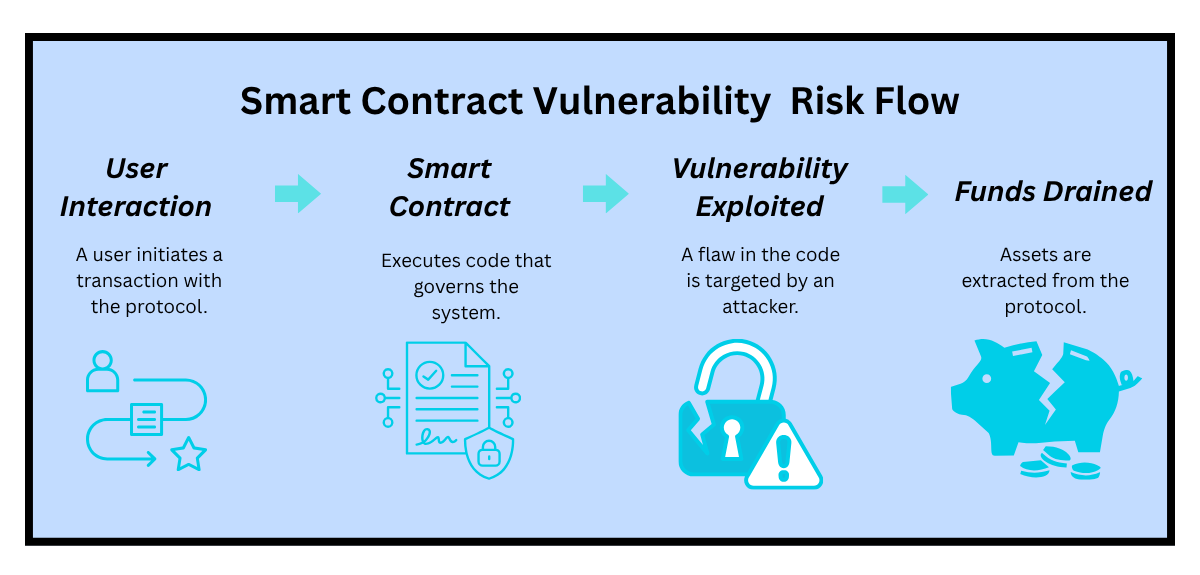
At the core of many crypto systems are smart contracts—self-executing code that defines how protocols operate.
These contracts are designed to be deterministic: they execute exactly as written. However, this also means that any flaw in the code can be exploited.
Smart contract risks include:
Because these systems are often open and composable, a single vulnerability can have wide-reaching effects.
In crypto, ownership is defined by control of private keys. This shifts custody from institutions to individuals or specialized providers.
There are two primary models:
Self-Custody
Users control their own keys, giving them full ownership of their assets. This removes reliance on intermediaries but introduces personal responsibility.
Third-Party Custody
Assets are held by exchanges or custodians, which manage security on behalf of users. This can improve usability but introduces counterparty risk.
Each model involves trade-offs between control, security, and convenience.
Market and Liquidity Risk
Crypto markets are highly dynamic, and liquidity conditions can change rapidly.
This creates risks such as:
These risks are often amplified by the structure of crypto markets, particularly during periods of stress.
As the ecosystem has grown, protocols and platforms have become increasingly interconnected.
This interconnectedness introduces systemic risk—where a failure in one part of the system can spread to others.
Examples include:
These connections can create cascading effects during market disruptions.

Crypto systems are designed to be open and accessible, but this also means users operate with fewer protections.
Understanding risk helps participants:
It also provides context for why certain systems succeed or fail over time.
Crypto does not eliminate risk—it redistributes it.
By understanding where that risk resides, participants can better navigate the system and engage with it more effectively.