
April 26, 2026
3 minutes

April 26, 2026
2 minutes

Crypto markets have experienced a series of high-profile failures—exchange collapses, protocol exploits, and liquidity crises. While these events are often viewed in isolation, they collectively provide insight into how the system behaves under stress.
More importantly, they reveal how resilience is built—not by avoiding failure entirely, but by learning from it.
A crypto crisis typically involves a breakdown in trust, liquidity, or system integrity.
These events can take many forms:
Despite their differences, they often share a common feature: they expose underlying weaknesses in systems that appeared stable.
One of the defining characteristics of crypto systems is transparency. Transactions, balances, and protocol activity are often visible on-chain.
During crises, this transparency can accelerate awareness. Market participants can observe stress in real time, which can lead to faster reactions—both positive and negative.
While this visibility can increase panic in the short term, it also allows for clearer post-event analysis.
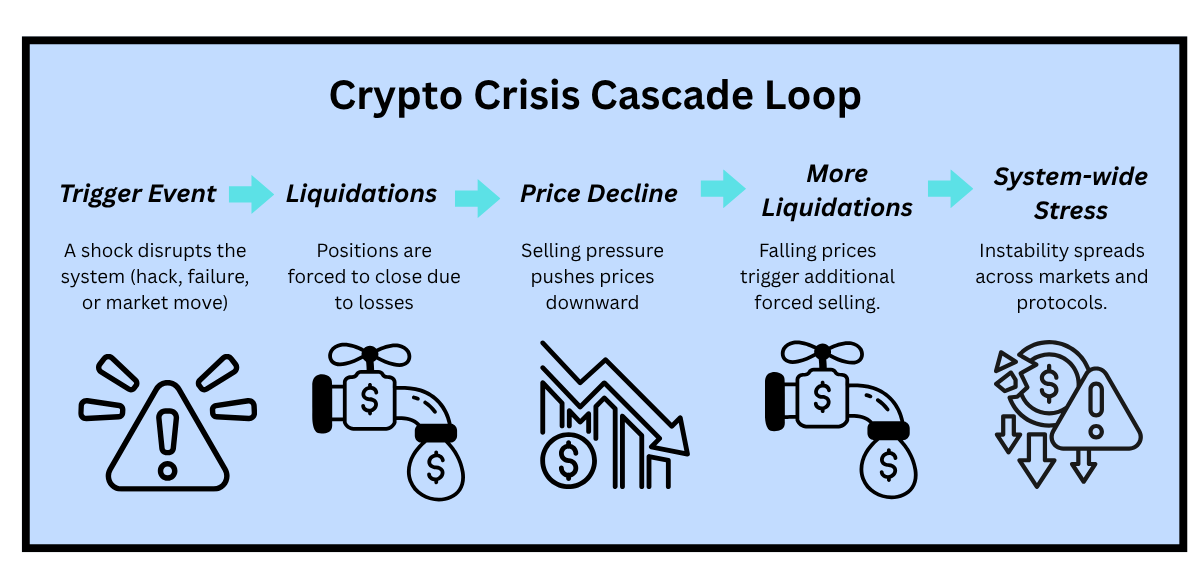
Crypto systems are interconnected, and this connectivity can amplify the impact of failures.
A disruption in one area—such as a liquidity shortfall or a protocol exploit—can trigger reactions elsewhere. Positions are unwound, collateral is liquidated, and confidence declines.
This creates a feedback loop where initial problems expand into broader market stress.
Despite these failures, crypto systems have continued to evolve.
Resilience in this context does not mean avoiding all risk. Instead, it involves:
Over time, these improvements contribute to a more robust ecosystem.
Resilience is not built solely at the protocol level.
Infrastructure improvements—such as better custody solutions and more reliable data systems—play a critical role. Regulatory developments can also influence how risks are managed and disclosed.
Together, these layers shape how the system responds to stress.
For users, developers, and investors, crypto crises offer practical lessons.
They highlight the importance of:
These lessons are often learned during periods of stress, but they apply across all market conditions.
Failures are an inherent part of emerging systems. In crypto, they serve as both a warning and a catalyst for improvement.
Understanding how and why these events occur provides a clearer view of how the ecosystem is maturing—and where it may still be vulnerable.