March 1, 2026
2 minutes

March 16, 2026
3 minutes

Tokenization is often framed as a technical breakthrough in financial infrastructure. Smart contracts automate execution. Blockchains enable instant settlement. Assets can be fractionalized, transferred, and tracked with unprecedented efficiency.
In many respects, the technology already works. So why hasn’t tokenization scaled?
Because the limiting factor is not how assets are issued or traded. It is how they are held.
Before tokenization can scale, institutions must answer a more fundamental question than how assets are issued or traded:
Who is legally responsible for holding, safeguarding, and controlling them?
Tokenization makes it easy to represent assets digitally:
But issuing a token is not the same as owning an asset, and it is certainly not the same as safeguarding one on behalf of others.
In traditional finance, custody is a regulated function with clear obligations:
Tokenization challenges these assumptions by separating:
Technology can represent ownership. Only law can define it.
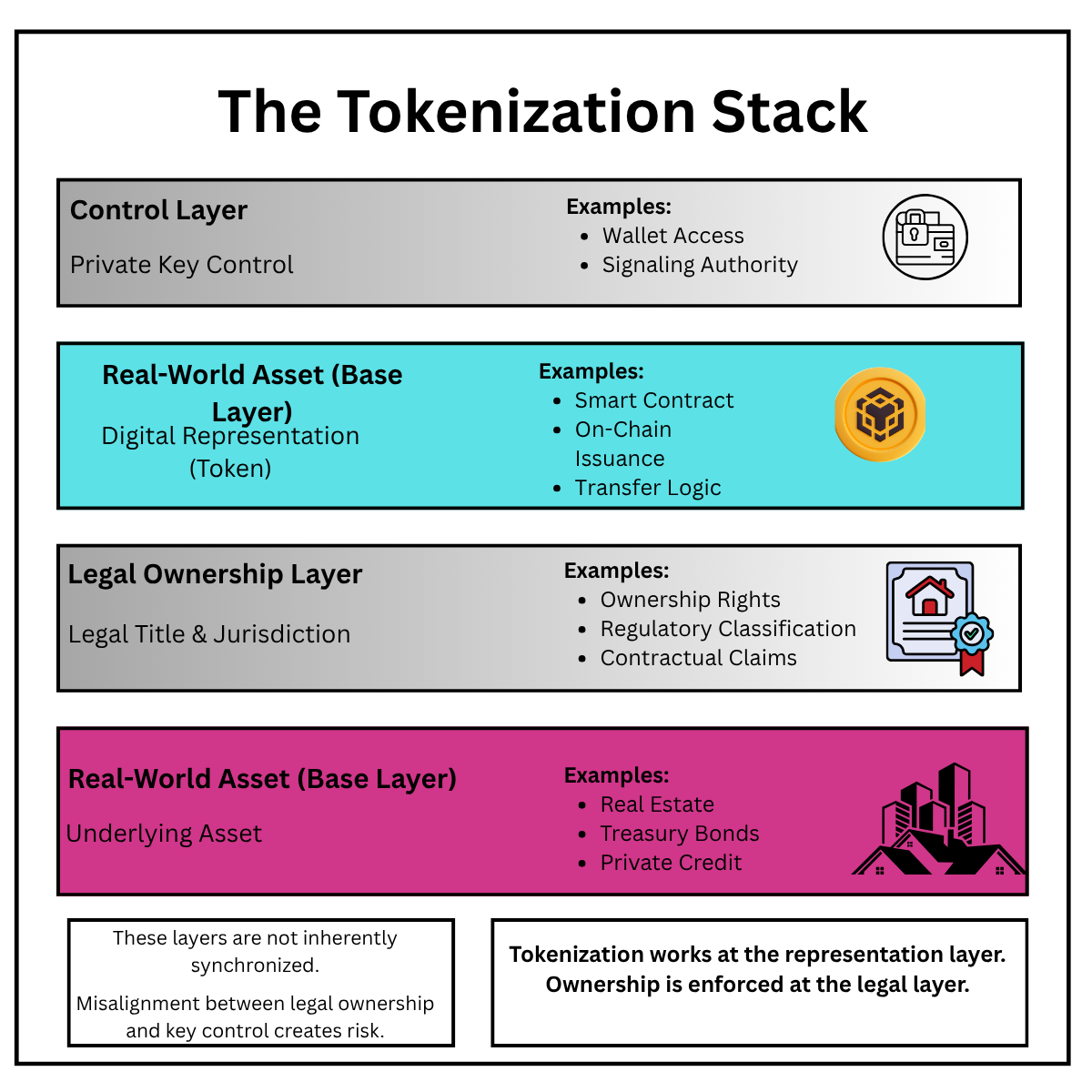
For institutions, custody is not operational detail — it is a risk boundary.
Banks, asset managers, and funds are accountable for:
Without a legally recognized custody framework, tokenized assets remain:
This is why institutional adoption slows not at issuance, but at who holds the keys — and under what legal authority.
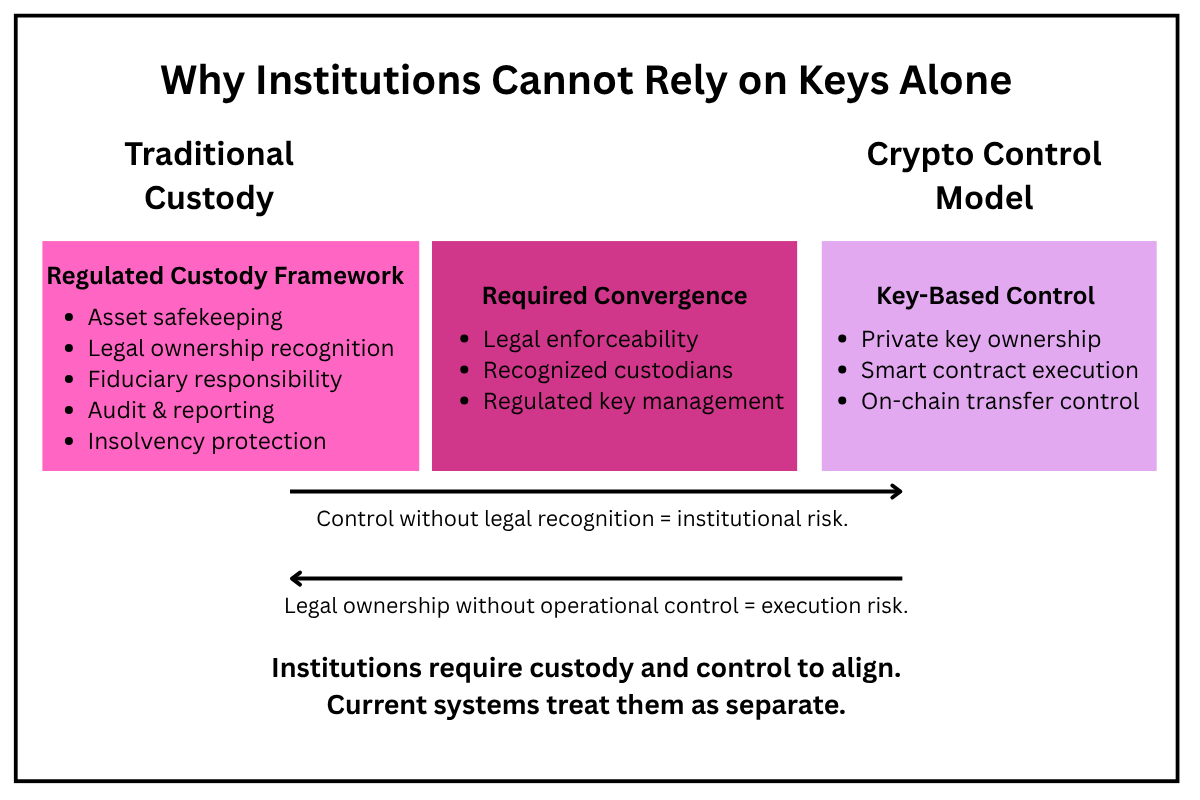
A common assumption in digital assets is that control equals ownership.
It is the idea that “whoever controls the private key owns the asset.”
This is technically true — and legally incomplete.
In regulated finance:
Institutions cannot rely on key possession alone because:
Tokenization requires custody models that reconcile cryptographic control with legal accountability.
The hardest questions in tokenization are not technical. They are about:
Until these questions are resolved, tokenization remains confined to:
The infrastructure can scale. The legal frameworks must catch up.
Tokenized assets scale when:
This is why progress in tokenization often looks slow — until it suddenly accelerates.
When custody frameworks solidify, adoption follows quickly.
Tokenization is not constrained by technology. It is gated by custody, law, and liability.
The institutions that solve custody — legally and operationally — will define the next phase of asset tokenization. Everything else is downstream.