April 26, 2026
3 minutes

April 26, 2026
3 minutes

As crypto has grown from a niche technology into a global financial system, governments and regulators have been forced to respond. What began as a largely unregulated space is now the subject of increasing scrutiny, debate, and policy development.
Understanding how regulation works—and why it varies so widely—is essential to understanding where crypto fits within the broader financial system.
Crypto regulation refers to the rules and frameworks governments use to oversee digital assets, market participants, and related activities.
These regulations aim to address a range of concerns, including:
Unlike traditional finance, where regulatory systems are well established, crypto regulation is still evolving. Different jurisdictions are taking different approaches, creating a fragmented global landscape.
Governments are not regulating crypto for a single reason. Instead, their approach is shaped by a mix of economic, legal, and political considerations.
At a high level, regulators are trying to balance two competing priorities: encouraging innovation while managing risk.
On one hand, crypto introduces new financial infrastructure, expands access, and creates economic opportunities. On the other, it raises concerns around fraud, volatility, and systemic risk.
This tension is at the heart of most regulatory decisions.
While approaches differ, most regulatory frameworks focus on a similar set of issues.
1. Market Oversight
Regulators aim to ensure fair and orderly markets by addressing manipulation, insider trading, and transparency.
2. Custody and Safeguarding
Rules around how assets are held are designed to protect users, particularly in centralized platforms.
3. Anti-Money Laundering (AML) and Compliance
Governments require certain entities to verify users and monitor transactions to prevent illicit activity.
4. Securities Classification
One of the most complex issues is determining whether certain digital assets should be treated as securities, commodities, or something entirely new.
These categories shape how assets can be issued, traded, and marketed.
One of the defining features of crypto regulation is that it is not uniform.
Different regions have adopted different strategies:
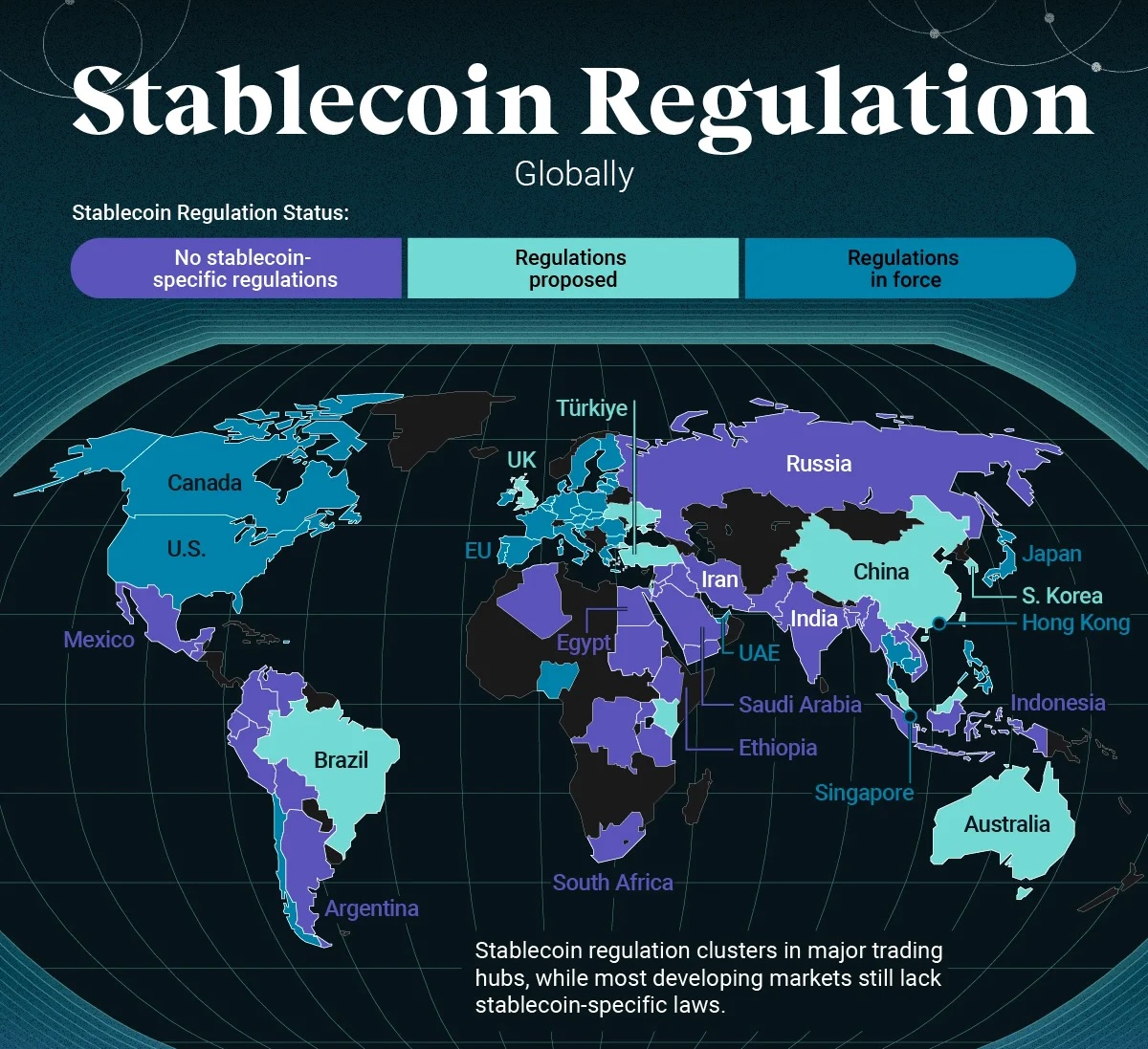
This variation creates both opportunities and challenges, as companies and capital often move toward more favorable jurisdictions.
Within each jurisdiction, multiple agencies may be involved in regulating crypto.
In the U.S., for example:
This overlap can lead to uncertainty, particularly when rules are not clearly defined.
Regulation plays a critical role in shaping how crypto evolves.
It influences:
In many ways, regulation acts as a bridge between crypto and the traditional financial system.
Crypto regulation is still being written in real time. While the rules are not yet settled, their direction will have a lasting impact on the structure and growth of the ecosystem.
Understanding regulation is not just about compliance—it’s about understanding the future of the market.
September 24, 2026
12 minutes