April 26, 2026
3 minutes
April 26, 2026
8 minutes

Crypto is no longer operating at the edges of the financial system.
What was once viewed primarily as a speculative or experimental sector has increasingly become part of larger conversations surrounding payments infrastructure, capital markets, settlement systems, and digital financial architecture. As institutional participation has expanded and stablecoins, tokenization, and blockchain-based financial products have matured, governments around the world have moved more aggressively to define how digital assets should be regulated.
This has created what is increasingly becoming a global regulatory race.
Different jurisdictions are competing to determine not only how crypto markets operate within their borders, but also whether they can position themselves as long-term centers of digital financial infrastructure. In many respects, regulation is no longer simply about consumer protection or market oversight. It has become part of a broader competition involving capital formation, financial innovation, technological leadership, and economic strategy.
The result is a fragmented global landscape.
Some jurisdictions have emphasized enforcement and restrictive oversight. Others have prioritized regulatory clarity and structured frameworks. Still others are attempting to position themselves as innovation-friendly hubs designed to attract capital, infrastructure providers, and institutional firms.
These regulatory differences are already influencing where companies build, where liquidity concentrates, and where institutional participation expands. Over time, they may also shape the broader architecture of global digital finance itself.
Understanding this regulatory race is increasingly essential to understanding the future direction of crypto markets.
In crypto’s early years, regulation was often treated as secondary to technological development.
The industry was relatively small, participation was largely retail-driven, and many governments viewed digital assets as speculative or peripheral to the broader financial system. As long as crypto remained isolated from major financial institutions and payment systems, regulators faced limited pressure to establish comprehensive frameworks.
That environment has changed significantly.
The growth of stablecoins, institutional investment products, tokenized assets, and blockchain-based settlement systems has increasingly pushed crypto into areas traditionally associated with core financial infrastructure. Digital assets are no longer solely about speculative trading. They now intersect with payments, custody, treasury management, securities markets, and cross-border capital flows.
This expansion created growing pressure for regulatory clarity.
Institutional investors, banks, asset managers, and public companies operate within strict legal and compliance environments. For these firms, regulatory uncertainty creates operational risk. Questions surrounding custody, securities classification, anti-money laundering requirements, tax treatment, and market structure directly affect whether participation is feasible.
As a result, regulation became central to crypto’s next phase of development.
Jurisdictions that provide clearer frameworks increasingly attract:
At the same time, jurisdictions perceived as unpredictable or hostile risk pushing activity elsewhere.
This dynamic transformed regulation from a purely legal issue into a strategic economic factor.
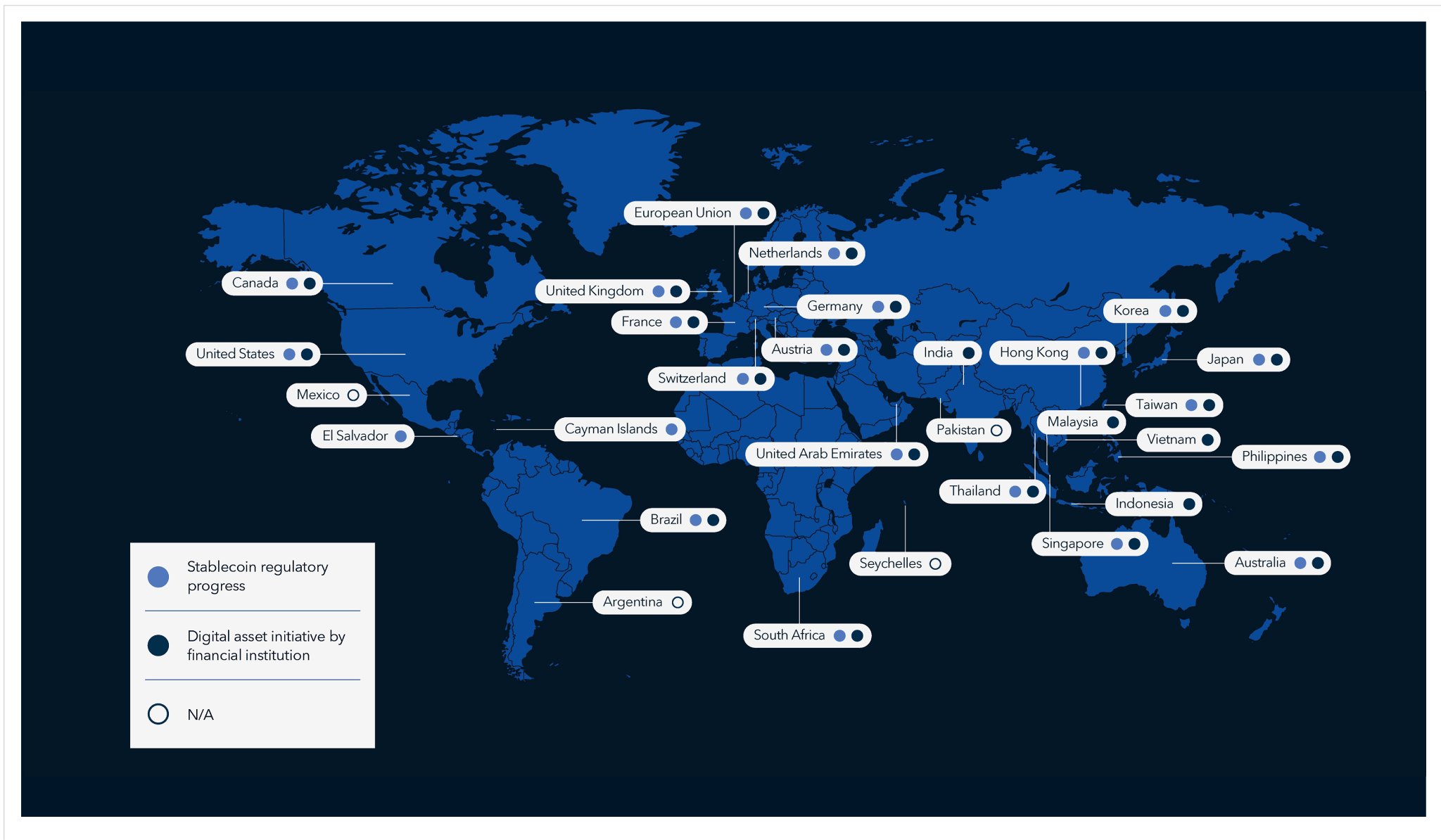
As governments responded to crypto’s growth, several broad regulatory approaches began to emerge.
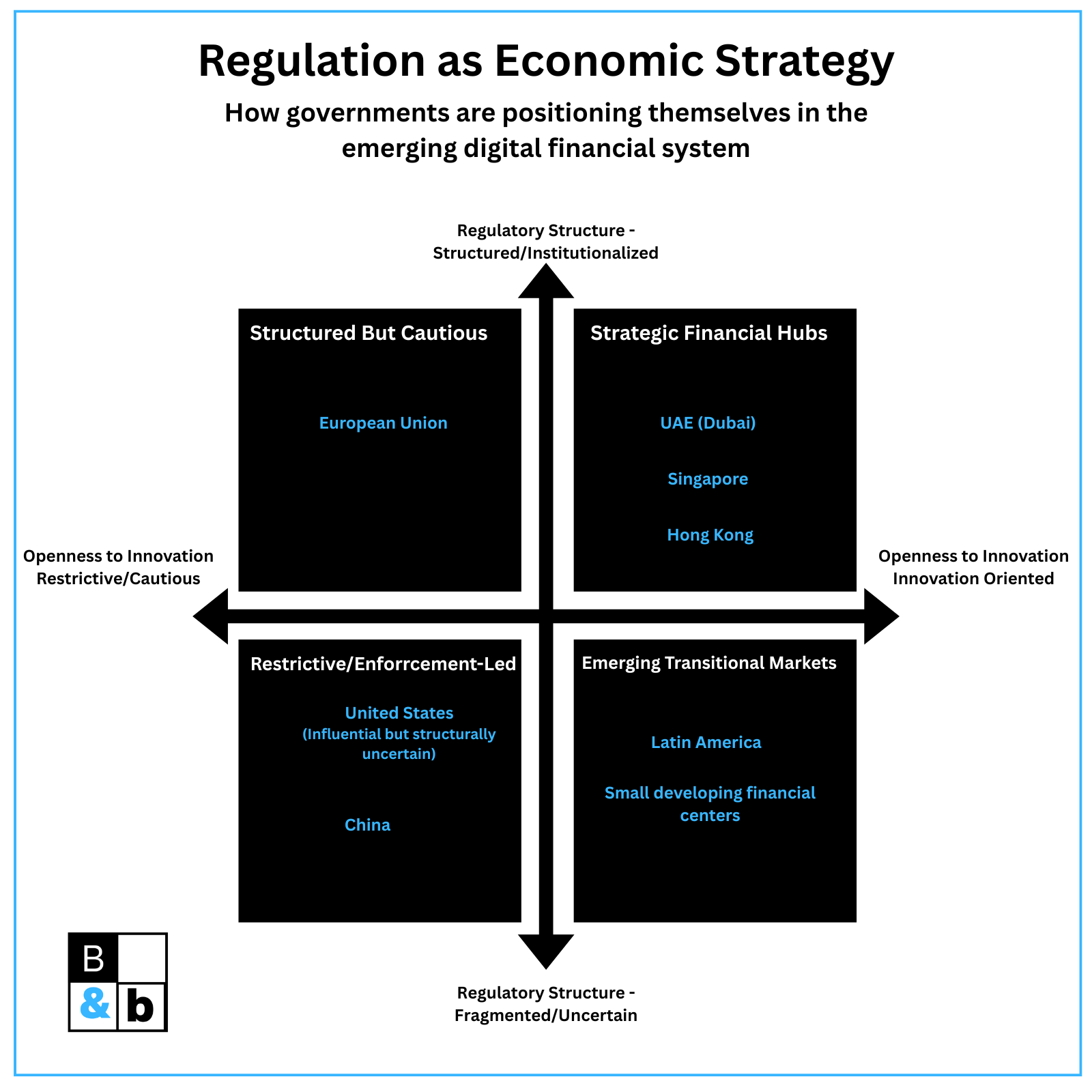
While no framework is perfectly uniform, most jurisdictions increasingly fall into one of three general models:
These models reflect differing political priorities, economic incentives, and attitudes toward financial innovation.
The United States has largely become associated with an enforcement-driven regulatory model.
Rather than establishing a single comprehensive digital asset framework early on, U.S. regulators often relied on enforcement actions and legal interpretation to shape the market. Agencies such as the U.S. Securities and Exchange Commission and the Commodity Futures Trading Commission increasingly attempted to define crypto activity through lawsuits, settlements, and regulatory guidance.
This created a market environment where many firms faced uncertainty regarding:
Supporters of this approach argue that strong enforcement protects investors and limits systemic risk. Critics argue that inconsistent guidance and overlapping jurisdictional claims create uncertainty that discourages innovation and long-term investment.
Regardless of perspective, the effects on market behavior have been significant.
Many firms operating in the United States have adopted more cautious strategies, limited product offerings, or expanded internationally in search of clearer operating environments.
The U.S. remains one of the world’s largest and most important financial markets, but its regulatory ambiguity has increasingly become a defining feature of its crypto landscape.
The European Union has generally pursued a more structured and framework-oriented approach.
Rather than relying primarily on enforcement, European regulators moved toward establishing standardized rules governing digital asset activity across member states. The Markets in Crypto-Assets (MiCA) framework became one of the most significant examples of this strategy.
The goal of this approach is not necessarily to create a fully permissive environment, but to provide:
For institutions, this type of clarity can be highly valuable.
Large financial firms often prefer clearly defined rules—even strict ones—over uncertain environments where compliance expectations remain ambiguous. Standardized frameworks can simplify licensing decisions, improve legal predictability, and reduce operational risk for firms operating across multiple jurisdictions.
The European approach also reflects a broader institutional philosophy emphasizing:
While some crypto firms argue that parts of Europe’s regulatory framework may become overly restrictive over time, the EU has nonetheless positioned itself as one of the most structurally coherent digital asset jurisdictions globally.
A third category includes jurisdictions actively attempting to position themselves as global crypto and digital asset hubs.
Regions such as Hong Kong, Singapore, and the United Arab Emirates have increasingly pursued this strategy by combining regulatory oversight with clearer licensing pathways and innovation-focused policies.
The United Arab Emirates, for example, established specialized regulatory structures such as VARA designed specifically for virtual asset oversight. Hong Kong has also sought to position itself as a regulated gateway for institutional digital asset activity within Asia.
These jurisdictions often view digital asset infrastructure as part of a broader economic strategy.
Attracting crypto firms can support:
Importantly, these hubs are not necessarily pursuing deregulation. Most maintain licensing requirements, compliance obligations, and anti-money laundering standards. The difference is that they often emphasize clarity and operational pathways rather than uncertainty.
This distinction matters significantly for institutions.
Large firms are generally not seeking unregulated environments. Instead, they seek environments where rules are understandable, licensing processes are achievable, and long-term planning is possible.
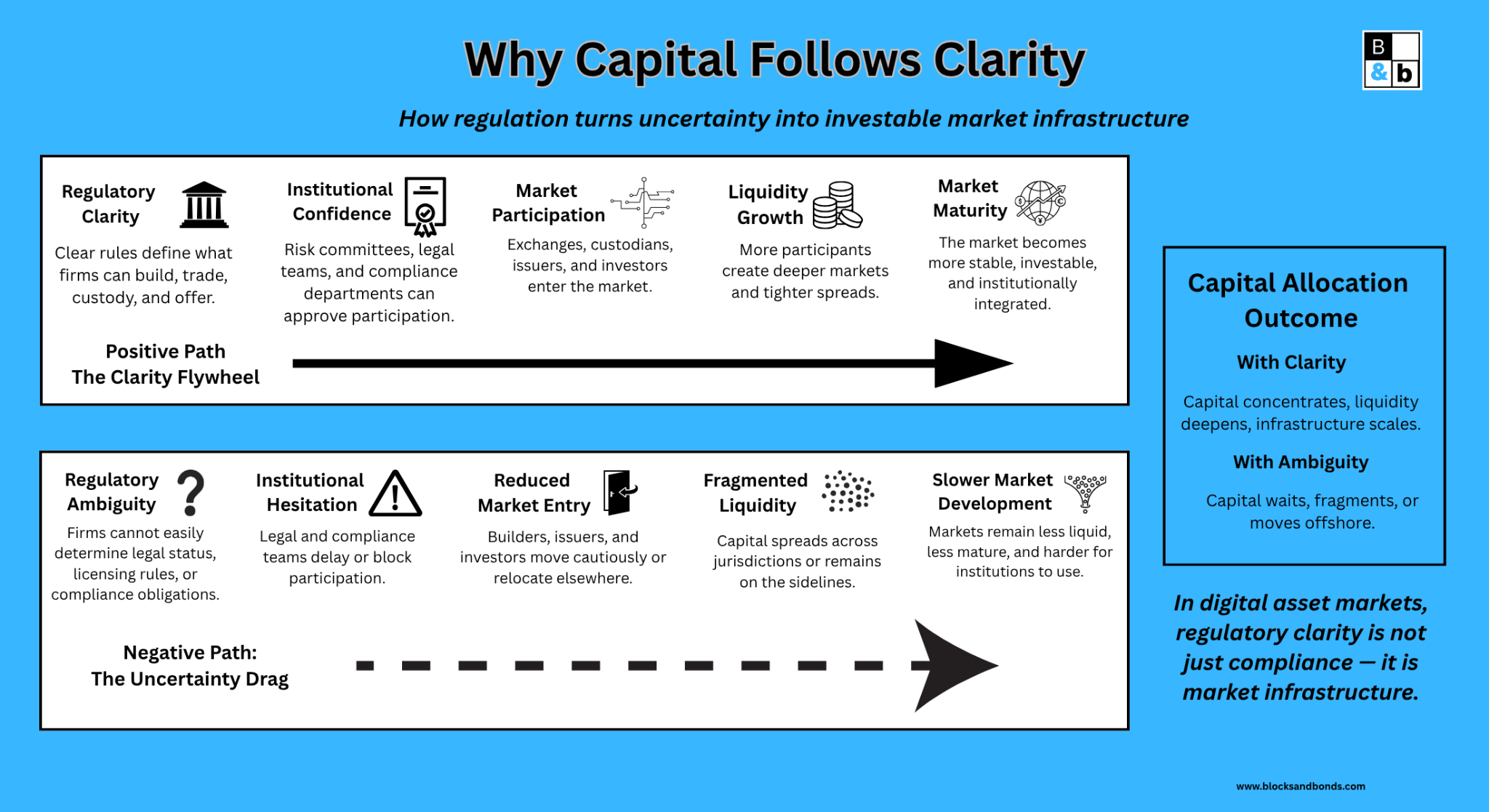
One of the clearest trends emerging from the global regulatory landscape is that capital tends to follow regulatory clarity.
Institutional firms operate under fiduciary obligations, compliance requirements, and internal risk management frameworks. Before allocating capital to digital assets or blockchain infrastructure, these firms must evaluate legal exposure, custody standards, reporting obligations, and operational risk.
Without regulatory clarity, many institutions simply cannot participate meaningfully.
This affects not only investment activity, but also:
Clearer regulatory environments reduce uncertainty surrounding:
As a result, jurisdictions with more predictable frameworks often attract:
This creates a feedback loop.
Greater regulatory clarity attracts more infrastructure providers and institutional participants, which increases liquidity and market maturity. Increased market maturity then encourages additional institutional participation.
By contrast, fragmented or uncertain regulatory environments can reduce participation, slow infrastructure development, and encourage firms to relocate operations elsewhere.
Over time, these dynamics influence the geographic distribution of crypto capital and infrastructure globally.
Increasingly, crypto regulation is not merely about overseeing speculative assets.
It is becoming part of a larger competition surrounding financial infrastructure and economic influence.
Stablecoins, tokenized assets, and blockchain-based settlement systems all have potential implications for:
This is particularly important in the context of stablecoins.
Dollar-backed stablecoins already function as major sources of liquidity within global crypto markets. In practice, they extend the reach of dollar-denominated financial infrastructure into blockchain-based ecosystems operating across borders and outside traditional banking hours.
As tokenization expands, similar dynamics could emerge in capital markets.
Blockchain-based settlement systems may eventually reduce friction in areas such as:
Jurisdictions that successfully attract digital asset infrastructure may therefore gain strategic advantages in the evolving architecture of digital finance.
This helps explain why some governments increasingly view crypto policy not simply as a regulatory issue, but as part of broader economic and technological positioning.
The debate is no longer solely about whether crypto should exist. It is increasingly about who will shape the infrastructure surrounding it.
Despite major differences between jurisdictions, there are signs that some degree of international convergence may gradually emerge.
As crypto markets become more institutionalized, common standards surrounding:
are becoming increasingly important.
International organizations and regulatory bodies have begun coordinating more actively on digital asset policy discussions. Global financial firms operating across jurisdictions also create pressure for more interoperable standards.
Complete global alignment, however, remains unlikely.
Political priorities, economic incentives, and attitudes toward financial innovation differ substantially between regions. Some jurisdictions prioritize innovation and competitiveness, while others place greater emphasis on financial control and risk containment.
As a result, the global crypto market is likely to remain partially fragmented.
Different regions may specialize in different aspects of digital finance:
The long-term outcome may not be a single unified global framework, but rather a network of partially aligned regulatory systems competing within a broader digital financial ecosystem.
Regulation is no longer a side issue within crypto markets.
It has become one of the primary forces shaping where capital flows, where infrastructure develops, and how digital finance evolves globally.
The jurisdictions that strike the most effective balance between innovation, oversight, institutional participation, and market stability are likely to play a major role in defining the next phase of the industry.
What is unfolding is not simply a debate about crypto policy.
It is a broader competition over the future architecture of financial infrastructure itself.