March 1, 2026
3 minutes

Scott Kasten
March 1, 2026
3 minutes

Both models exist today. Both serve legitimate purposes.
The question is not which is superior, but where each is most effective.
On-chain settlement is most efficient when:
This is why stablecoins shine in:
In these cases, shared state reduces friction more than private ledgers ever could.
Off-chain systems remain effective when:
Retail payments and internal bookkeeping often fall into this category.
The most effective stablecoin systems are hybrid by design:
This mirrors traditional finance, where netted transactions eventually settle through central infrastructure.
Stablecoins simply compress the timeline and reduce the complexity.
The largest hidden cost in payments is reconciliation — not transaction fees.
By anchoring settlement to a shared ledger:
This is where stablecoins generate structural efficiency, not just marginal savings.
For banks and enterprises, the takeaway is practical:
Stablecoins enable institutions to choose the optimal settlement path for each workflow.
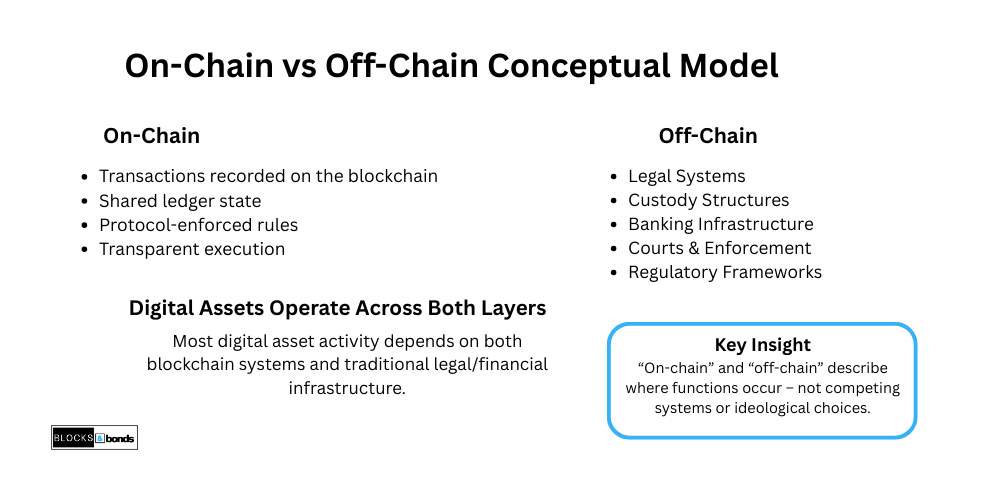
The on-chain vs off-chain debate is a false binary.
Stablecoins create real efficiency by bridging execution and settlement, allowing institutions to combine private systems with shared infrastructure where it matters most.
The future of payments is not fully on-chain — it is selectively on-chain, by design.